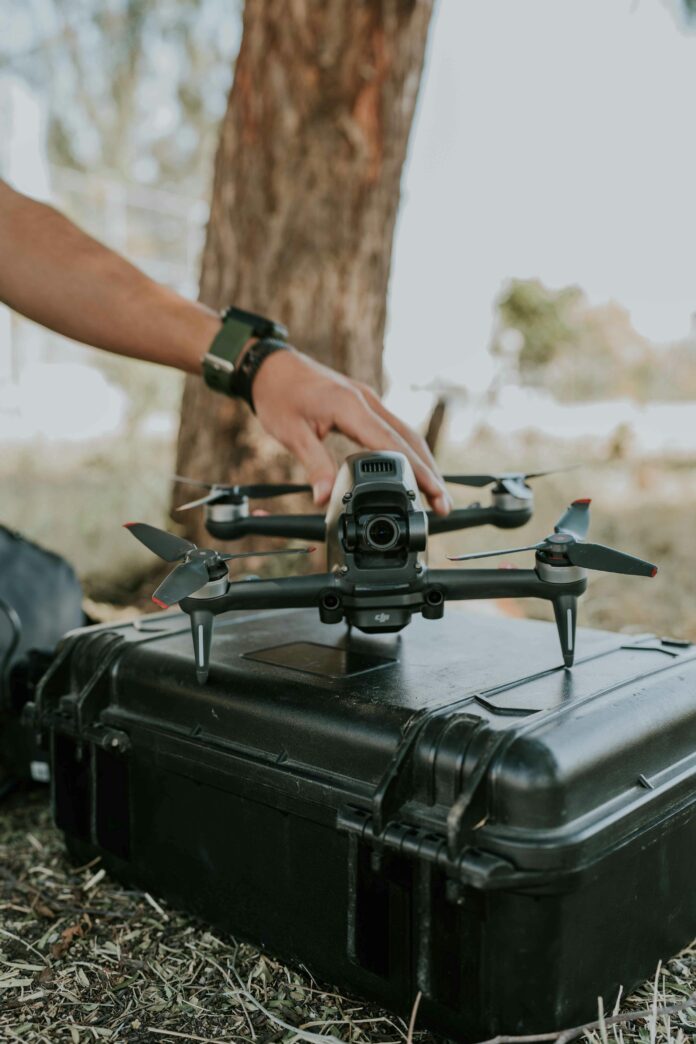
Ukraine undoubtedly has emerged as a prominent force in drone warfare in recent years. The country has demonstrated its capabilities well in developing and deploying unmanned aerial vehicles (UAVs) during the ongoing Russia-Ukraine conflict. The world has witnessed the use of both military and commercial drones in different operational roles during this conflict. It reflects phenomenal innovation in tactics and technology by a relatively small country like Ukraine against an enormous adversary.
Such a massive use of drones in this conflict have made this the “first high-intensity drone war”. Both sides have extensively deployed drones for reconnaissance, surveillance, targeting, and direct strikes. What we are observing in recent years is a game-changing transformation in the war theatrics – a paradigm shift in the tactical and strategic landscape of modern warfare. Today there is a wide range of UAV applications, from aerial photography and rescue operations to military command, surveillance, and reconnaissance, demonstrating the versatility that Ukraine is harnessing.
There are various factors contributing to Ukraine’s journey to prominence in drone warfare. The recent conflict with Russia made it imperative to become self-sufficient in the defence industry, especially focusing on drone manufacturing. With the escalation in the conflict, the demand for UAVs in Ukraine increased and as the conflict turned into an all-out war that prolonged, it increased tenfold. An innovative ecosystem for unmanned aviation emerged, fostering synergy between science and industry.
When the conflict started, Ukraine depended mainly on commercial quadcopters for reconnaissance and small payload delivery. However, they were more susceptible to jamming. The defence ecosystem in Ukraine had to ultimately shift from improvisation to indigenization for developing specialized UAVs. What used to be a costly device a few years ago, became cheaper with local innovation, technological excellence and economy of scale production. Another notable ability Ukraine acquired during this period was to quickly integrate and modify commercial drones for military purposes. This resulted in a more diverse drone arsenal that really amazed the world. So, Ukraine now possesses a broad spectrum of drones meant for different missions.
- First-Person View (FPV) drones are the most prominent among them. They are low-cost (nearly US$ 1,000) drones used for kamikaze missions. They are mostly used to strike vehicles and fortifications. To avert jamming, fiber-optic controlled versions were innovated.
- Gaining the ability to strike deep inside enemy territory is an important objective in warfare. This was achieved by launching Long-Range Loitering Munitions having the capability to travel between 700–1,600 km. They include systems like the FP-1 and Peklo.
- Another objective during the hot war is penetrating contested airspace at least time. The Jet-Powered Platforms like UJ-25 “Skyline” sneak into enemy airspace and hit targets quickly.
- Group drone tactics swarms enemy territory in coordination formation for surveillance and strike both. They are meant to disrupt the enemy defences by sheer volume and autonomy.
Let’s look at the breakdown of all the drones that have been used in the war by Ukraine so far:
| Name | Type / Role | Origin | Status | Range / Endurance (approx.) | Payload / Effects |
| Bayraktar TB2 | MALE UCAV / strike & ISR | Turkey | Used since 2022 | ~150+ km datalink; 24–27 h endurance | MAM-L/C guided munitions |
| PD-2 | Tactical UAS (ISR/strike capable) | Ukraine (Ukrspecsystems) | In service / produced | Up to ~8–10 h; 180+ km control link | Up to ~7–11 kg payload; can drop light munitions |
| SHARK | Tactical ISR (artillery/HIMARS spotting) | Ukraine (Ukrspecsystems) | In service / produced | ~300 km flight range (ferry), ops to 80 km into EW zone | EO/IR gimbal (30× optical) |
| Leleka-100 | Hand-launch ISR (also RAM II base airframe) | Ukraine (DeViRo) | In service / produced (incl. Czech production) | ~100 km, ~2 h | EO/IR |
| A1-CM Furia | Hand-launch ISR / laser designator | Ukraine (Athlon Avia) | In service / produced | ~2–3 h (varies by mod) | EO/IR; laser designation (A1-CMX) |
| UJ-22 Airborne | Multipurpose fixed-wing (ISR/strike) | Ukraine (UKRJET) | In service / produced | Up to ~14 h (reported), long-range flights documented | Can carry small bombs / mines |
| UJ-26 “Bober” (Beaver) | Long-range one-way attack (loitering) | Ukraine | In service / evolving | Long-range (hundreds of km); ramp-launch | Warhead (kamikaze) |
| AQ-400 “Scythe” | Low-cost long-range one-way attack | Ukraine (Terminal Autonomy) | Mass production ramped | ~750 km; 100 kg MTOW | ~32–43 kg warhead |
| RAM II / RAM-2X | Loitering munition (fixed-wing) | Ukraine (DeViRo / RAM UAV) | In service; RAM-2X in trials/combat | 30–150+ km (open sources vary by version) | ~3 kg (EFP variant on RAM-2X) |
| Punisher | Reusable light strike UAV | Ukraine (UA Dynamics) | In service (SOF, select units) | ~45 km | ~2.5 kg bomb (modular) |
| R-18 Octocopter | Multirotor bomber (top-attack) | Ukraine (Aerorozvidka) | In service / produced | Short-range; night ops | 3× RKG-1600 HEAT bombs |
| Switchblade 300/600 | Loitering munitions | USA (AeroVironment) | Delivered / used | 300: ~10 km / 15+ min; 600: ~70+ km / 40 min | AT/anti-personnel warheads |
| Phoenix Ghost | Loitering munition (details limited) | USA (AEVEX) | Delivered / used | (Undisclosed) | Top-attack / airburst variants |
| Warmate | Loitering munition | Poland (WB Group) | Delivered / used | ~30–80 min, 10–30 km (by head) | Multiple warheads (HE/thermo/FAE) |
| RQ-20 Puma | Small ISR UAS | USA (AeroVironment) | Delivered / used | ~2–3.5 h; ~20–60 km (LRTA) | EO/IR |
| ScanEagle | Long-endurance ISR UAS | USA (Insitu/Boeing) | Delivered / used | ~20+ h; ~100 km | EO/IR (options incl. SAR) |
| MAGURA V5 (USV) | Unmanned surface “kamikaze”/multi-mission | Ukraine (HUR) | In service / produced | ~500 miles (~800 km) reported | Explosive charge; variants tested with missiles |
| Sea Baby (USV) | Heavy unmanned surface attack / multi-role | Ukraine (SBU) | In service / produced | ≥1000 km; up to ~90 km/h | Up to ~850 kg warhead; modular (rockets/thermobarics) |
| Morok | Long-range one-way attack (project) | Ukraine (SSU/volunteer backed) | In production/delivery to units | (Long-range, ~800–1000 km cited) | Kamikaze warhead |
| Sokil-300 (Sokol-300) | Strike/ISR UCAV (project) | Ukraine (Luch DB) | Development / prototypes | (var. engine options; long-range) | Up to 4 ATGMs (RK-2P/RK-10) |
Besides surveillance and strikes, countering enemy onslaught is an important war objective. With the help of Bukovel-AD, Ukraine acquired the capability to detect UAVs at 100 km and jam them at closer ranges.
The conflict exhibits quick diffusions of military technological advances such that relative advantage, compatibility, complexity, trialability, and observability facilitate diffusions of technologies such as drones. The ideals have been successfully applied by Ukraine to adopt new drone technologies and practices rapidly.
The fast capability to innovate and transform by the country often using off-the-shelf commercial materials is juxtaposed with slower military procurement cycles. That allows high attrition rates to occur as alternates less expensive are produced in large quantities or bought.
In conclusion, Ukraine’s rise to drone power or drone war leader follows as a natural consequence from its proximate operating requirements, domestic development investment, and agile adoption of new tactics where often existing commercial technologies are put to military purposes. This fluid situation heralds a paradigm shift in fighting modern conflict itself in which drones take on a role that’s central and progressively sophisticated.